What if building your own shop gives you control but takes time away from running your business? If you’re asking, “should I build my own e-commerce site?”, the answer depends on more than the platform you choose. Weigh the time and skills required against the customer experience your shop needs to deliver.
It’s understandable to want a straightforward way to start selling online while worrying that a basic-looking shop could weaken customer trust. This guide helps you compare DIY and professional development, choose an approach that fits your products and plans, and prepare before you start building or commissioning a site.
You’ll also learn which features to consider, when professional support may make sense, and whether a brochure website could be a better fit if you don’t need to take payments online.
Key Takeaways
- Check whether a DIY build fits your available time, skills and store requirements before choosing a platform.
- When asking “should I build my own e-commerce site?”, compare the control you gain with the setup and upkeep you’ll take on.
- Clarify your goals and map what customers need to do before you start building or brief a development partner.
- Prepare your product information, website content, payment needs and order-handling process to make your next steps more focused.
Should I Build My Own E-commerce Site? Start With What Your Shop Needs
Building your own online shop can suit a straightforward business if you have time to set it up, manage its content and make routine changes. The choice is between configuring a ready-made platform yourself and commissioning a store designed and developed around your requirements. Start with what customers need to do, rather than a long list of features.
An e-commerce site lets customers place orders and pay online. A brochure website presents your services and helps potential customers get in touch, but doesn’t take orders. If online transactions aren’t part of your plan, a brochure website may be a more suitable starting point. For a basic introduction to the subject, see understanding e-commerce.
What must your online shop do from day one?
Write down the essentials before choosing how to build. This turns a broad idea into a practical brief, whether you’re setting up the shop yourself or discussing e-commerce website design and development with a partner.
- Products: List what you’ll sell and the information customers need to compare options and choose.
- Payments and delivery: Note how customers will pay, where you plan to deliver and how you’ll prepare and send orders.
- Order management: Map the work after checkout, from receiving an order to updating its status and dealing with customer questions.
Separate launch essentials from ideas that can wait. A clear product catalogue, a working checkout and a manageable order process may be essential; extra features can be considered later if customers or your business need them. For example, if orders require steps that standard tools don’t support, or the shop needs to exchange information with another system, assess the time and expertise involved before committing to a DIY build. Custom workflows or connections can make professional development a more practical route.
DIY E-commerce Site or Professional Build? Compare the Trade-offs
Choosing between a DIY build and professional development means balancing control, time, flexibility and upkeep. A DIY platform lets you make routine changes yourself, but you’ll also be responsible for setting up the shop, checking that key tasks work and keeping information current. A professional build involves explaining your needs and working with a developer on the result. It may be a better fit for a distinctive design or more complex requirements.
Platform types affect how much you manage. A hosted service provides the website system and hosting together, so you configure the shop using its tools. A content-management system is software for creating and updating a site; it can offer more flexibility, but you may need to arrange and manage additional parts of the setup. Before choosing, check what each option includes, what you’ll need to manage yourself and the provider’s current features and costs.
A quick launch doesn’t mean the work is finished. Even a template-based shop needs accurate product details, payment and delivery settings, and checks of the customer journey. Test the shop by following the steps a customer would take, from finding a product to placing an order. After launch, you’ll still need to update information and check that the site works as intended.
Which route fits your skills, schedule and store complexity?
If you have time and confidence to learn, and your store’s requirements are straightforward, DIY may be a sensible starting point. If a distinctive design, connections to other systems or custom order processes are priorities, professional development may better match your needs. Compare the work involved with the time you can realistically set aside, as well as what your customers need. Neither route is right for every business.
If you’re unsure how complex your requirements are, a conversation about your e-commerce requirements can help clarify the scope and suitable approach.
Plan Your E-commerce Site: Practical Steps Before You Build or Brief an Agency
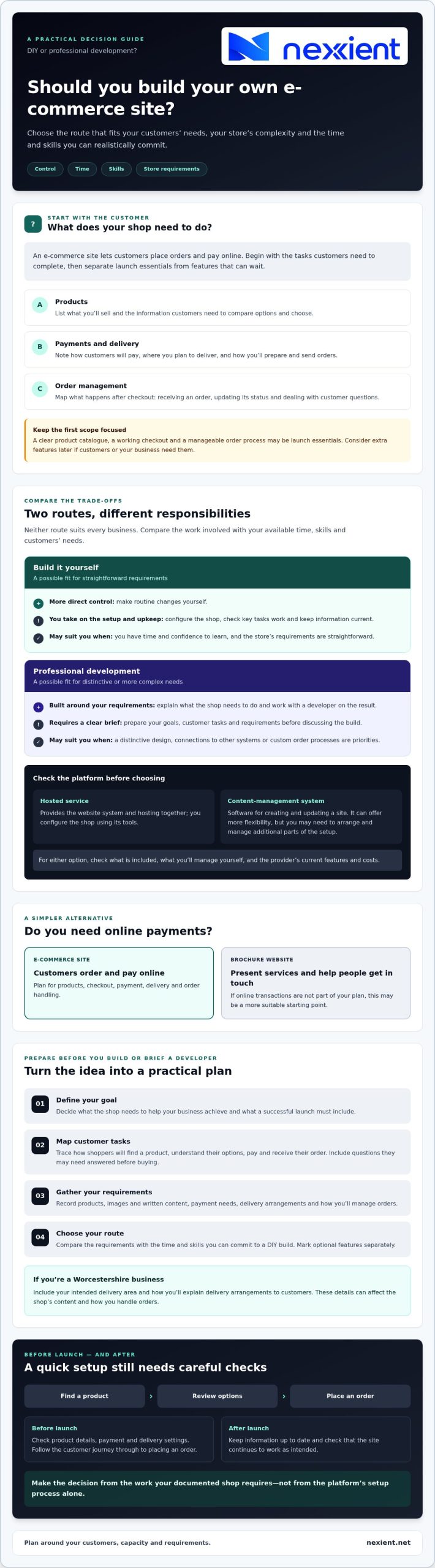
A clear plan helps you choose a route and gives you a stronger starting point, whether you’re building the shop yourself or speaking with a developer. Before you begin, work through these steps:
- Define your goal: Decide what the shop needs to help your business achieve and what a successful launch must include.
- Map customer tasks: Note how shoppers will find a product, understand their options, pay and receive their order. Include questions they may need answered before they buy.
- List your requirements: Record your products, images and written content, payment needs, delivery process and the steps you’ll take to manage orders.
- Choose your route: Compare your requirements with the time and skills you can commit to a DIY build. Mark optional features separately so they don’t complicate the initial scope.
If you’re a Worcestershire business, include your intended delivery area and how you’ll explain delivery arrangements to customers. These details can affect the shop’s content and the way you handle orders, whether you sell locally or plan to reach customers further afield.
This preparation makes the decision more concrete. If you’re still asking, “should I build my own e-commerce site?”, compare the work involved with the complexity of the shop you’ve documented, rather than relying on the platform’s setup process alone.
When is it time to speak with an e-commerce developer?
Consider professional input if the requirements exceed the time you can give the project, or if the design, connections to other systems or order processes need more than standard tools can provide. Nexient offers e-commerce website design and development. A discussion about your scope can help clarify what the project needs before you decide how to proceed.
Bring your product and content list, customer journey and order-handling notes to that conversation. If you’re in Worcestershire and would like to discuss your plans, contact Nexient about your e-commerce project.
Choose the Right Route and Move Forward
The answer to “should I build my own e-commerce site” depends on how much time you can commit and how closely your shop’s requirements match the tools available. A straightforward store may be manageable as a DIY project; a shop with a distinctive design or custom processes may call for professional development. Either way, a clear brief will help you make a confident decision.
Before taking the next step, gather your product information, content, payment needs and order-handling process. Then compare those requirements with the skills and time you can realistically set aside. Nexient provides e-commerce website design and development, alongside brochure websites, landing pages and custom digital solutions for businesses, including those in Worcestershire.
If you’d like to explore the professional route, discuss your e-commerce website plans with Nexient. Share your requirements to start a conversation about an approach that fits your business.
Frequently Asked Questions
Is it difficult to build your own e-commerce website?
It depends on the shop’s requirements and your confidence with digital tools. A simple store may be manageable using a platform with ready-made layouts, but you’ll still need to add product information, configure payments and delivery, test the customer journey and maintain the site. Custom designs, connections to other systems or unusual order processes can make the work more demanding.
Can I build an e-commerce website without coding?
Yes, some hosted e-commerce platforms let you create a shop using visual tools and pre-designed layouts without writing code. You’ll still need to make decisions about the shop’s structure, content and settings, then test that key tasks work as expected. Check the platform’s current features and whether they cover your needs before committing.
When should I hire a professional to build my online shop?
Consider professional help if your requirements exceed your available time or technical confidence, or if you need a distinctive design, connections to other systems or custom order processes. If you’re asking “should I build my own e-commerce site?”, write down your needs first, then compare them with what you can manage. Nexient provides e-commerce website design and development for businesses, including those in Worcestershire.
Is a DIY e-commerce site cheaper than hiring a web design agency?
A DIY site may cost less to set up, but that doesn’t guarantee a lower overall cost. Compare platform subscriptions and any paid extras with the time you’ll spend building, testing and maintaining the shop. A professional project has its own fee, which depends on the agreed scope. List your requirements and compare the full costs before deciding.