What if adding another contact button isn’t the answer to getting more enquiries from my website? If visitors browse but don’t get in touch, the issue may be elsewhere in their journey. They might not understand your offer, find the information they need or feel confident taking the next step.
It’s frustrating when you can’t tell which page or message is putting potential customers off, or what to improve first. More relevant enquiries usually come from making the whole experience clearer and easier, not relying on one button alone.
This practical guide will help you identify where visitors may be dropping away, strengthen your offer and make it simpler for suitable customers to contact you. You’ll also learn how to use available website data to prioritise changes and assess whether they’re helping, so your next steps are based on evidence rather than guesswork.
Key Takeaways
- Define what counts as a meaningful enquiry, then focus on attracting contacts that suit your business.
- Review priority pages for a clear offer, useful details that build confidence and one obvious next step.
- Make it easier for visitors to get in touch by checking that forms ask only for information you need.
- For getting more enquiries from my website, track completed and suitable enquiries, then test one meaningful change at a time.
Getting more enquiries from your website starts with finding the real barrier
A website can attract visits and still leave you wondering why suitable customers aren’t getting in touch. That’s frustrating, especially when it’s unclear whether the issue is visibility, the visitors arriving or what they experience on the page.
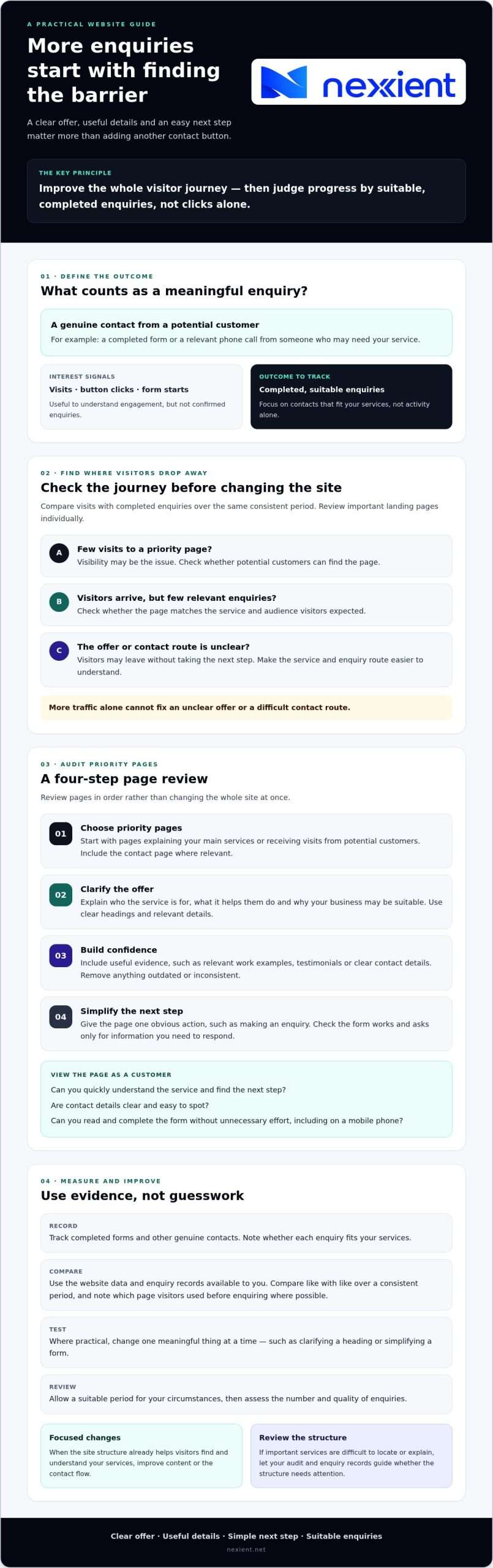
Start by defining an enquiry as a meaningful contact from a potential customer, such as a completed form or a relevant phone call. A visit, button click or form start may show interest, but it isn’t a confirmed enquiry. Keeping that distinction clear helps you focus on outcomes rather than activity alone.
Is the problem traffic, relevance or the website journey?
Compare visits with completed enquiries over the same consistent period, using the analytics and enquiry records available to you. Review key landing pages individually. If a page has few visits, visibility may be the issue. If it attracts visitors but few relevant enquiries, check whether the content matches the service and audience they expected to find.
For example, someone arriving on a page about e-commerce websites should quickly understand what the service covers and how to ask about it. If the message is vague or the contact route is hard to find, visitors may leave without taking the next step. Conversion rate optimization (CRO) describes the broader practice of improving the proportion of visitors who complete a desired action.
More traffic alone can’t fix an unclear offer or a difficult contact route. First identify where the gap appears, then investigate that part of the journey. Businesses in Worcestershire reviewing their website structure can see how brochure website design can support clear information and enquiry routes.
To get more relevant enquiries from your website, judge progress by the suitability of those contacts, not just by whether visits or clicks have increased.
How to audit your website and remove barriers to enquiries
Once you know which pages deserve attention, review them in order rather than changing the whole site at once. This makes it easier to spot specific barriers and decide what to fix first.
- Choose priority pages. Start with pages that explain your main services or receive visits from potential customers. Include the contact page if visitors need to use it to enquire.
- Clarify the offer. Check whether each page quickly explains who the service is for, what it helps them do and what makes your business a suitable choice. Use clear headings and relevant details instead of broad claims.
- Build confidence. Look for useful evidence that helps a visitor assess your business, such as relevant examples of your work, testimonials or clear contact details. Remove anything outdated or inconsistent.
- Simplify the next step. Give each page one obvious action, such as making an enquiry. Check that the form works and asks only for information you need to respond.
What should you check on each important page?
View each page as a customer would, including on a mobile phone. Is the next step easy to spot? Are the contact details clear? Can you read and complete the form without unnecessary effort? The fundamentals of lead generation include making it straightforward for interested visitors to take action.
A clear service-page structure helps visitors understand what you offer and where to go next. For a relevant local example, see Nexient’s Worcestershire brochure website design page. If your review suggests the website structure or usability needs a more considered solution, you can discuss your website requirements.
Measure website enquiries, test improvements and plan your next step
Once you’ve made a change, check whether it leads to more completed enquiries from suitable potential customers. Record completed forms and other genuine contacts, then note whether each fits your services. Clicks and form starts can help show where visitors engage, but they aren’t confirmed leads.
Use the website data and enquiry records available to you, and compare like with like over a consistent period. If you can, note which page visitors used before enquiring. This can help you see whether a change to a particular page or contact route is making a useful difference.
Where practical, test one meaningful change at a time, such as clarifying a page heading or simplifying a form. Allow a suitable period to gather enough information for your circumstances, then review the number and quality of enquiries. For broader ideas to improve your business’s visibility online, consider how visibility and a clear next step work together. If a campaign needs its own focused destination, explore Nexient’s landing page design.
When should you improve the existing site or seek a redesign?
Make focused content or contact-flow changes when the site structure already helps visitors find and understand your services. If important services are difficult to locate or explain, review the structure itself with a professional. Let your audit and enquiry records guide the next step rather than relying on a promise of a particular result.
If you’re considering getting more enquiries from my website, use what you’ve learned to set a clear priority. You can discuss your website and enquiry goals with Nexient and consider which changes best fit your needs.
Turn your website review into a clear next step
Getting more enquiries from my website starts with understanding where suitable visitors lose confidence or struggle to take action. Review the pages that matter, make your offer and contact route clear, then track completed enquiries and their relevance. Test focused changes one at a time so you can make your next decision with better evidence.
If your website’s structure makes important services difficult to find or explain, a more substantial review may be needed. Nexient combines website design, development and practical strategy, with services including brochure websites and landing pages. The right approach depends on your business and what your website needs to do.
Ready to explore a practical next step? Discuss how your website can support more relevant enquiries. A clearer journey can give the right visitors more confidence to get in touch.
Frequently Asked Questions
Why is my website getting visitors but no enquiries?
Visitors may leave without enquiring if a page doesn’t match what they expected, the offer is unclear or the next step is difficult to find. Check which pages attract visits and compare that with completed enquiries over the same period. Review those pages from a potential customer’s perspective, including whether the information and contact route work together.
How can I get more enquiries from my website without a redesign?
To get more enquiries from your website without a redesign, start with targeted changes to the pages visitors already use. Make the service and intended audience clearer, bring the main contact action into view and remove unnecessary form questions. Check the changes on a mobile phone, then review completed enquiries and their suitability before deciding what to adjust next.
How do I measure whether my website is generating enquiries?
Count completed forms and other genuine contacts, then record whether each enquiry is relevant to your services. Use available analytics alongside your enquiry records, and compare the same pages and time periods consistently. Button clicks and form starts can help identify where visitors show interest, but don’t count them as completed enquiries. Check that any tracking tools you use are set up to record the actions you need.
Do I need a landing page to get more website enquiries?
No, a landing page isn’t essential if your existing service pages clearly explain the offer and make it easy to enquire. It can be useful when a focused campaign needs a dedicated page with one clear message and next step. Businesses in Worcestershire can consider whether a landing page fits that purpose, or whether improving an existing page would better support their visitors.