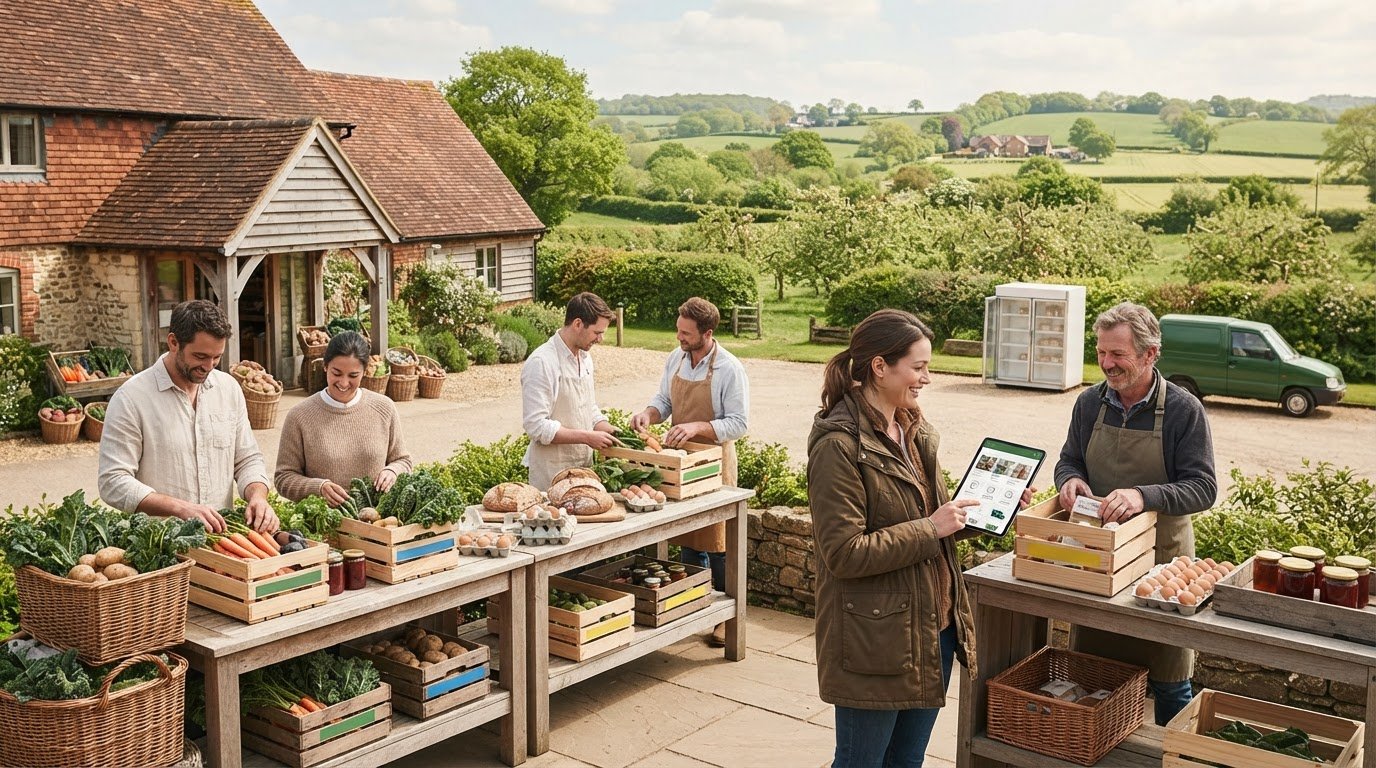
A farm shop’s online sales need to fit what’s in stock, how products are handled and when customers can collect or receive them. E-commerce for farm shops in the UK can bring online orders, click-and-collect and delivery into one clear process.
Selling online should make it easier for customers to buy without adding unnecessary work to daily shop operations. Build the ordering process around your products and fulfilment capacity, with clear information at every step.
This guide covers how to organise online orders, collection slots, sales and delivery. It also explains what to consider when choosing an e-commerce website, so you can create a practical online route to purchase for your farm shop.
Key Takeaways
- Design online ordering around your stock, preparation routine and collection capacity so customers know what to expect.
- Set clear collection and delivery arrangements that account for how fresh or fragile products are handled.
- Compare e-commerce platforms by how well they support your product range, order process and day-to-day shop operations.
- Plan the website around the way your farm shop sells, making it easier for customers to browse, order and choose fulfilment.
Online ordering and click-and-collect
Design the order journey so customers can choose products and fulfilment, then see clear collection or delivery details.
Building online sales channels
Set click-and-collect slots that match staff capacity, with a cut-off time for preparing orders. You can also take home-delivery orders, supply other shops or create an online shop for food products. Group collection orders by slot and delivery orders by route. Use electronic point of sale (EPoS) reports to distinguish online orders from in-store transactions, spot popular products and plan seasonal ranges. Recipe ideas and product pairings can help customers discover related items.
Choosing an e-commerce platform
Compare platforms by how they manage product listings, collection slots, delivery options and order updates. Check whether staff can adjust stock and fulfilment details without rebuilding product pages. Reporting that separates online orders from shop-floor sales makes it easier to compare channels and identify products to promote. For repeat purchases, make reordering simple and send relevant seasonal offers.
Managing stock and operational challenges
Set a routine for updating online stock whenever produce arrives or sells in store. Seasonal availability can change quickly, so show stock status clearly and pause orders when supply runs out. Before checkout, explain how substitutions work and record customer preferences with each order. Common challenges include inaccurate stock, fragile goods, preparation time and delivery costs. Track these against order volumes to see which products and fulfilment options are practical.
Meeting online selling requirements
Provide accurate product, ingredient and allergen information before purchase, and keep it consistent with the item supplied. For alcohol, meat, dairy and other regulated products, account for relevant checks and safe handling. Set VAT treatment by product, and display prices, delivery charges, terms and cancellation information before checkout. Clear details help customers understand their purchase and staff prepare orders accurately.
Sales orders and delivery arrangements
Give customers clear fulfilment choices at checkout, then make each sales order straightforward to prepare. In Worcestershire, plan delivery routes around the shop’s location, product range and handling capacity.
Offering delivery and collection options
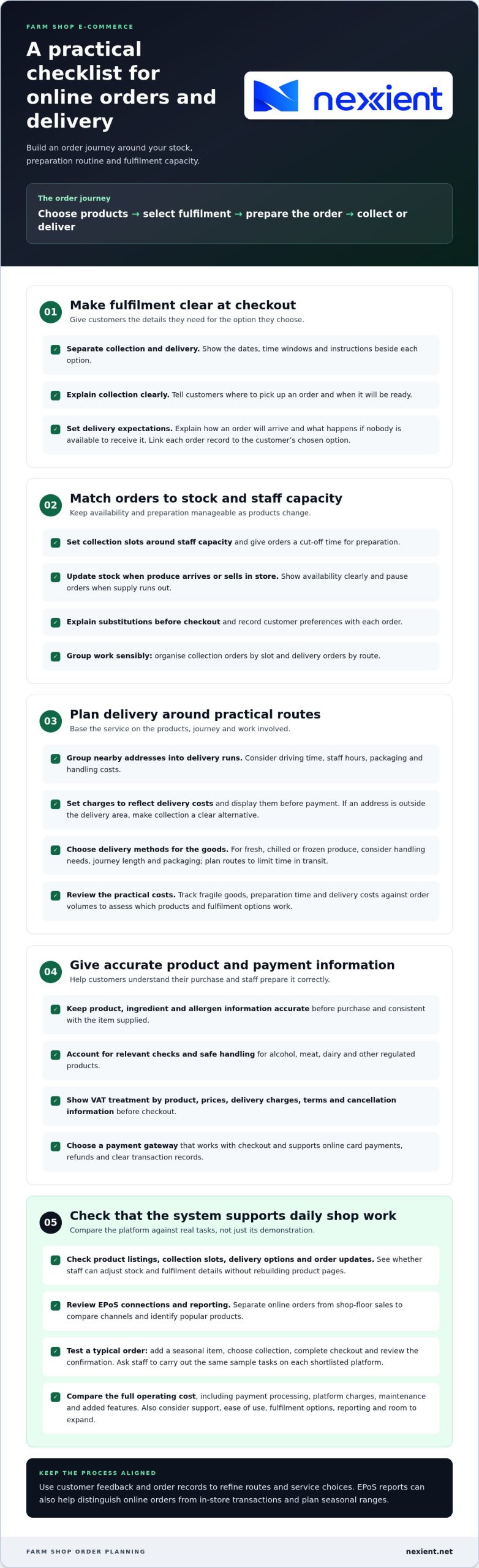
Present collection and delivery as separate options, with dates, time windows and instructions beside each. A customer collecting a vegetable box, for example, needs to know where to pick it up and when it will be ready. For home delivery, explain how the order will arrive and what happens if nobody is available to receive it. Link each order record to the customer’s chosen option.
Setting delivery areas and charges
Plan the local delivery area around practical routes rather than a broad radius alone. Group nearby addresses into delivery runs, then compare driving time, staff hours, packaging and handling costs. Set charges that reflect those costs and show them before payment. If an address is outside the delivery area, offer collection as a clear alternative instead of accepting an order you can’t fulfil.
Choosing payment gateways and delivery services
Choose a payment gateway that works with your checkout and supports online card payments, refunds and clear transaction records. Review how sales reconcile with EPoS so staff can match payments to orders. For fresh, chilled and frozen produce, choose delivery methods based on handling needs, journey length and packaging. Group suitable products, plan routes to limit time in transit, and explain delivery arrangements at checkout. Use customer feedback and order records to refine routes and service choices.
Account for the costs of selling online, particularly when handling perishable or fragile goods. Include them when reviewing product and delivery options, alongside the handling needs of each item. This keeps fulfilment practical and makes the cost of preparing and delivering orders visible.
What e-commerce platforms are best for UK farm shops?
The right platform fits your products, order volumes and fulfilment process. When comparing e-commerce for farm shops in the UK, assess product management, checkout, order handling and room to grow.
A hosted platform provides a managed online shop, while software you adapt and manage yourself offers more control over how it is built. With either approach, check who handles updates and what staff will manage day to day. A small Worcestershire shop may prioritise straightforward product editing, while a producer selling wholesale and direct may need more flexible workflows.
Test a typical order before choosing a platform. Add a seasonal item, select collection, complete checkout and review the confirmation. Check whether staff can update availability and product details without technical help. Product pages should clearly show sizes, ingredients, storage advice and relevant fulfilment information.
Check how the platform connects with your existing systems, including EPoS and customer records. Review available reports, such as sales by product or order channel. Consider ongoing costs, including payment processing, platform charges, maintenance and added features. Compare the full operating cost, not just the initial setup, when assessing e-commerce for farm shops in the UK.
Use a scorecard to compare shortlisted platforms: ease of use, fulfilment options, reporting, support and room to expand. Ask staff to complete the same sample tasks on each system. This practical test can show whether a platform suits daily selling, beyond its product demonstration. If you’re ready to plan your online shop, explore e-commerce website options.
Nexient: Business Websites
Nexient can turn your farm shop’s online sales plan into a clear, practical website. Its eCommerce Websites support online product sales, while a Business Website can present your shop, products and collection information in one place.
Talk to Nexient when you’re ready to move from platform research to planning the customer journey. Map what customers need to see, from product details and availability to ordering and fulfilment options. Use those priorities to shape a website around your shop’s operations and identity.
For a seasonal range or campaign, a Landing Page can give customers a direct route to the offer. Choose the format that suits your next step, whether you’re building a full online shop or introducing a specific range.
Contact Nexient to discuss a website for your farm shop’s goals.
Make your next online step count
Your online shop should evolve with the way your farm shop operates. Before building, choose a clear priority: making more products available to browse, simplifying repeat orders or making fulfilment smoother. Map that goal to the pages and processes customers need, then decide how you’ll assess whether the experience is working.
A considered approach to e-commerce for farm shops across the UK creates room to grow without losing sight of daily operations. Start with the customer task that matters most, keep the journey straightforward, and refine it using customer questions and feedback.
Nexient can help shape the digital experience around your farm shop’s next stage. Contact Nexient about farm shop e-commerce to discuss your plans and take a practical next step.
Build confidently, one well-chosen step at a time.
Frequently Asked Questions
How can a UK farm shop handle local delivery, click and collect, and delivery areas?
Use postcode-based checkout rules to show customers which fulfilment options are available for their address. For a Worcestershire shop, group nearby postcodes into practical delivery runs, then set order cut-offs that give staff enough time to pick and pack. Keep a dispatch list for each run and close dates temporarily when capacity is full. This helps prevent orders from exceeding what the team can prepare.
What UK food safety, labelling and allergen rules apply to selling food online?
Provide accurate product, ingredient and allergen information before purchase, and keep it consistent with the item supplied.
What VAT, consumer rights and distance-selling rules apply to UK online farm shops?
Set VAT treatment by product, and show prices, delivery charges, terms and cancellation information before checkout.