
A donation platform may charge a UK charity 2 to 5% of each donation. That platform fee is separate from the cost of building and maintaining the website, so the cost of a charity website with donations depends on more than the initial build price.
It’s easy to focus on the build and overlook fees, accessibility, security and ongoing support. This guide explains what platform fees cover, how charity website providers compare with agencies, and which features can affect the overall budget. You’ll have a clearer basis for planning a website that fits your charity’s needs.
Key Takeaways
- Separate one-off build work from recurring costs so your budget accounts for the website after launch.
- Compare charity website providers and agencies by the design, donation features and support your charity needs.
- Make accessibility, security and regular maintenance part of your website plan, not last-minute additions.
- Map out how donations, Gift Aid and privacy information will work before deciding on your website’s structure.
Accessibility, maintenance and security
Plan for the work after launch as well as the initial build. That budget can cover routine updates, checks and fixes, helping keep donation journeys usable as your fundraising develops.
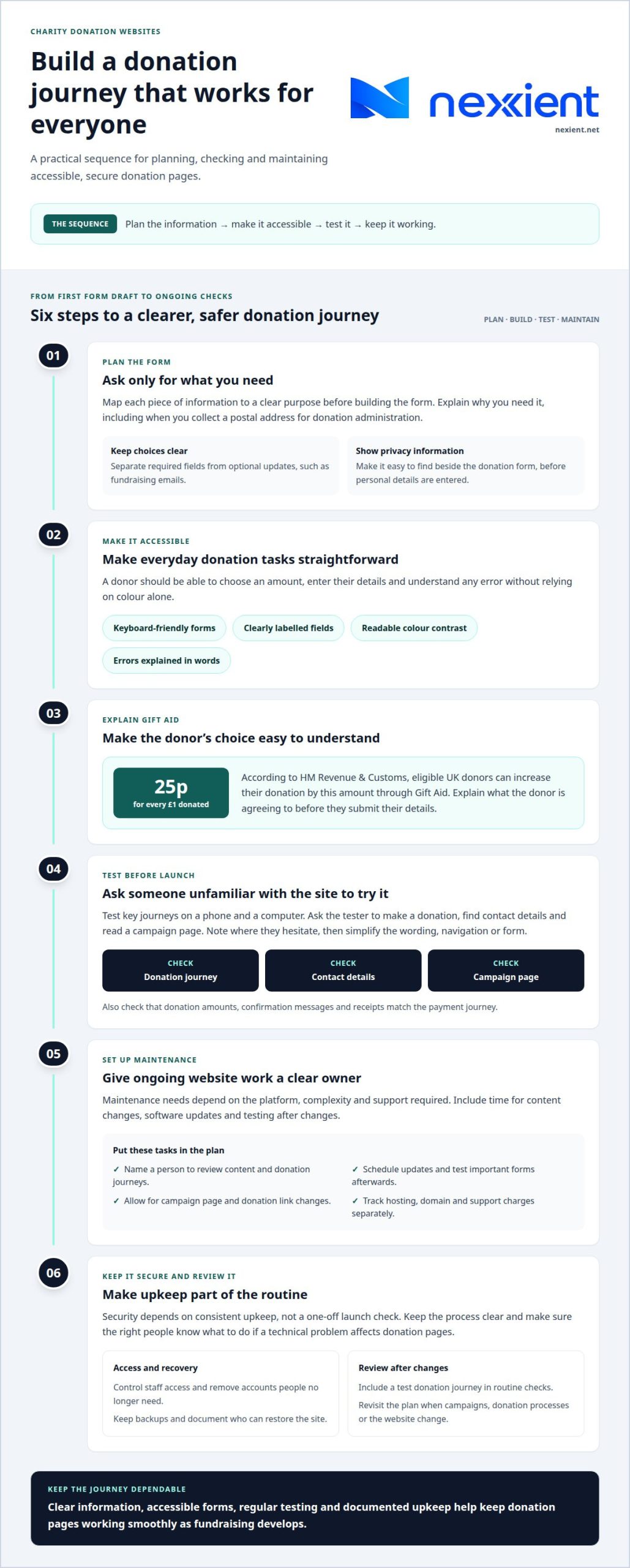
Accessibility starts with everyday tasks. Make donation forms work with a keyboard, label each field clearly and use readable colour contrast. A donor should be able to choose a donation amount, enter their details and understand any error without relying on colour alone.
Before launch, test key journeys on a phone and computer. Ask someone unfamiliar with the site to make a donation, find contact details and read a campaign page. Note where they hesitate, then simplify the wording, navigation or form. Clear headings and descriptive buttons also help visitors find the next step.
Maintenance costs depend on the site’s platform, complexity and support required. Include time for content changes, software updates and testing after changes. A new fundraising campaign, for example, may need updated landing pages and donation links. Review these journeys regularly so outdated information or broken links don’t undermine a campaign.
Budget separately for the basics. These costs sit beyond the build and belong in your ongoing budget.
Security depends on consistent upkeep, not a one-off launch check. Set a process for updating the site, controlling staff access and removing accounts people no longer need. Keep backups and establish who can restore the site if a technical problem affects donation pages. Include a test donation journey in routine checks.
Use this practical review to shape your ongoing plan:
- Assign a named person to review website content and donation journeys.
- Schedule updates and test important forms after changes.
- Check that backup and recovery steps are documented.
- Track recurring hosting, domain and support charges separately.
Revisit the plan when your charity adds a campaign, changes its donation process or updates its website. These changes can affect accessibility checks, security tasks and the support needed to keep fundraising pages working smoothly.
What UK legal requirements apply to charity donation websites, including Gift Aid and privacy?
Build the donation journey around clear information, accurate records and a straightforward Gift Aid process. UK donors eligible for Gift Aid can increase their donation by 25p for every £1 donated, according to HM Revenue & Customs. Make the Gift Aid option easy to understand, and explain what the donor is agreeing to before they submit their details.
Keep the donation form focused. Ask only for information your charity needs to process the gift and its follow-up. Separate required fields from optional updates, such as fundraising emails. Label each field clearly and explain why you request the information. Donors should be able to review their choices before completing payment.
Make privacy information easy to find before a donor enters personal details. Link it beside the donation form, not only in the website footer. Explain in plain English how your charity uses donation and contact details, who can access them, and how a donor can raise a privacy question. Keep the wording aligned with your actual processes.
Map each data point to a purpose before building the form. If you collect a postal address for donation administration, explain why. If donors can opt into campaign emails, keep that choice separate from the donation itself. Review the form whenever your charity changes its fundraising activity or how it handles donor information.
Use these practical checks before launch:
- Test the Gift Aid option and its accompanying explanation from a donor’s perspective.
- Check that donation amounts, confirmation messages and receipts match the payment journey.
- Review every form field and remove information your charity does not need.
- Make privacy information accessible from each donation page and test the link.
Keep a record of who reviews the donation journey and when. A simple review process helps staff spot outdated wording after campaign changes and keep donor-facing information consistent across campaign pages, forms and follow-up messages.
Planning a new donation journey? Discuss your charity website requirements as you shape the forms, information and donor experience.
Nexient: Business Websites
Nexient can help your charity turn its fundraising goals into a clear, practical website. Its Charity Websites suit organisations planning a new site or replacing one that no longer supports their donation journey. The project can bring campaign information, donation pathways and useful content together in a coherent experience for supporters.
Start by setting out what the site must help visitors do, such as understand your work, make a donation or find campaign details. Then identify the pages and functions that matter most. This creates a focused brief and helps align the website with your charity’s priorities. If you need a standalone campaign page, a Landing Page can provide a focused route for that content.
Contact Nexient to discuss your charity website project.
Plan the next step with purpose
Turn your priorities into a short project brief before shaping the website. Note what supporters need to find, how they should donate and which tasks your team must manage. This gives you a practical starting point for discussing scope and future development.
The cost of a charity website with donations depends on the design, donation journey, integrations and ongoing support involved. Nexient creates charity websites around each organisation’s needs, with project-based fees shaped by the agreed scope. If your organisation also plans to sell goods online, an eCommerce Website can support that activity; a Business Website can organise key information for visitors.
Bring your goals and essential requirements together, then contact Nexient about your charity website to discuss the next step. A clear brief can help turn your plans into a focused, useful experience for supporters.
Frequently Asked Questions
What is a platform fee?
A platform fee is a charge from the service that provides or processes online donations. It may be deducted from each gift or charged under the platform’s pricing arrangement. Check whether it is separate from payment processing charges, and calculate its effect using your charity’s expected donation amounts. This helps you compare platforms by the amount your organisation receives, not just setup convenience.
How can you budget for your charity website?
Build a budget around project scope and ongoing use. List the pages, donation functions and connections to other tools your charity needs, then separate one-off development from recurring hosting, support and transaction charges. Add a line for staff time spent updating campaigns and checking donation journeys. Review the budget when fundraising plans change, so new forms or campaign pages don’t become unplanned work.
What are the processing fees for standard payment methods?
Processing fees depend on the payment provider, transaction method and pricing arrangement. Card payments and digital wallets can have different charges, and providers may apply a percentage, a fixed charge or both. Compare the full terms for each method your donors are likely to use. Record these charges separately from any donation platform fee to understand the total deduction.
How much does it cost to build a charity website in the UK?
The cost of a charity website with donations varies by build approach and scope. More pages, tailored design and connections to donation tools can increase the work involved.
What are typical UK web design agency prices for charity websites?
The scope often reflects how much tailored design, functionality and connection to other tools the project needs. Define essential features first, then compare proposals against that shared scope.