
A bespoke website can suit an accounting firm when its services, client journey and identity need more than a standard template can offer. The right web developers for accountants in Worcester can build a site around your priorities, helping prospective clients understand what you do and how to get in touch. Whether this approach is worthwhile depends on what your website needs to achieve, not simply how distinctive it looks.
A tailored site can be a significant decision, particularly when it needs to communicate trust and support your business goals. This guide explains how to assess whether bespoke development suits your practice, which choices shape a project, and what to consider about an agency’s location and working approach. You’ll also see how design, content and functionality work together, helping you decide whether a custom website is the right foundation for your firm’s next stage.
Key Takeaways
- Decide whether a bespoke build fits your firm by identifying what your website needs to do for prospective clients.
- Define your project’s content, design and functionality before comparing development approaches.
- Look for relevant accountancy work and client testimonials when assessing a Worcester web developer’s experience.
- Explore Nexient’s Business Websites if you’re ready to shape a professional online presence around your firm.
Can you create a bespoke website for my firm?
Yes. A bespoke website can give an accountancy firm a structure tailored to its services, clients and enquiry process. For example, a redesigned site can guide visitors from a tax service page to a clear enquiry form.
Bespoke website design and development
Start by mapping services such as bookkeeping, payroll or tax advice to clear pages and next steps. A responsive design should work smoothly on mobile and desktop, with a straightforward route from service information to an enquiry. For UK privacy, explain how you use personal data in a privacy notice and seek consent before using non-essential cookies. Plan accessible navigation, readable text and keyboard access from the outset.
Comparing website costs and timelines
A bespoke website typically takes 8 to 12 weeks to go live. The work often involves agreeing the page structure, preparing content, reviewing designs and testing the site before launch. Subscription websites spread payments over time and may use templates with standard pages. Compare what each option includes, such as content support, hosting, updates and control over design. For a bespoke project, scope, integrations and content needs shape the work involved.
Assessing accountancy web developers
Review portfolios for accountancy projects, then check whether the pages explain specialist services clearly and make enquiries straightforward. Ask for relevant references and read testimonials for examples of communication and project delivery. Before signing, check the contract for deliverables, payment stages, ownership, revisions and ongoing support. Local search optimisation, meaning work to improve your website’s visibility in nearby search results, and Google Business Profile support are separate deliverables. Include them in the agreed scope if you need them. For conversion-focused redesigns, look for clear calls to action and layouts that help visitors find the right service.
Which Worcester web developers specialise in accountants?
Worcestershire web development results include 178 agencies, but a directory category alone doesn’t show accountancy specialism. To identify web developers for accountants in Worcester, look for clear evidence of work designed specifically for accountancy practices, rather than general business websites.
Start with each agency’s published examples. An accountancy-focused project might organise services such as annual accounts, tax returns and payroll into distinct pages, using language suited to business owners and individuals. Look for a clear path from each service to an enquiry, and check whether the design reflects the firm’s audience rather than relying on generic financial imagery. These details can show how well the developer understands an accountancy firm’s needs.
Next, assess how the developer approaches the project. A useful discussion should cover your client groups, the services you want to promote, the content you can provide and the actions visitors should take. Ask how these priorities will shape the site structure and design. For example, a practice seeking more business clients may need to make its business tax services easier to find than personal tax information.
Before choosing, compare the proposed scope with your priorities. Check which pages, content tasks, revisions and post-launch support are included. Ask how the developer will assess whether visitors can easily find key information and make enquiries. A local agency may offer in-person meetings, while a remote team can work through scheduled calls and shared documents. Choose the approach that suits your team, then record the agreed deliverables and responsibilities in the contract.
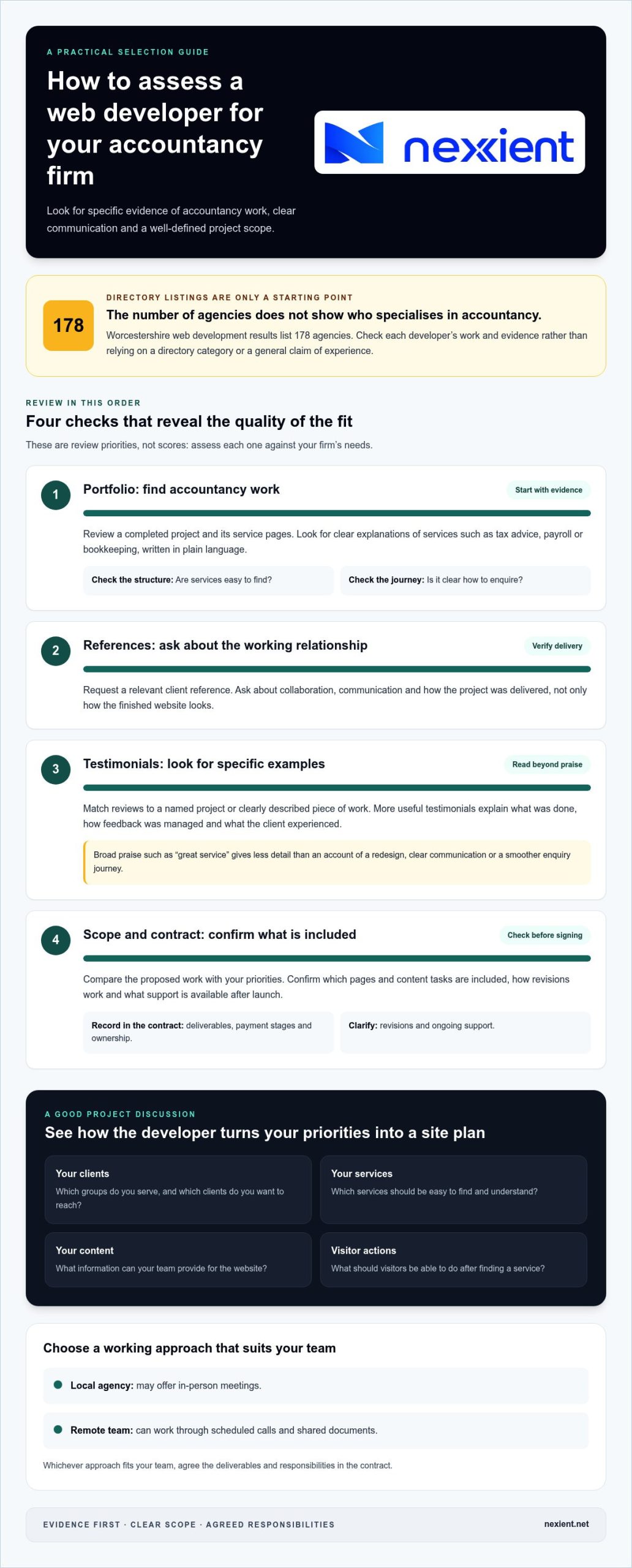
Which Worcester web developers have experience with accountancy firms and client testimonials?
Worcestershire web development results list 178 agencies, but that directory figure doesn’t show which have built accountancy websites. Check each agency’s portfolio and testimonials for specific examples of work with accountants, rather than relying on a general claim of experience.
Look closely at any accountancy project shown. Does the site explain services such as tax advice, payroll or bookkeeping in plain language? Can visitors quickly find the right service and understand how to enquire? A strong example should show how page structure, wording and design reflect the firm’s clients, not just present a polished home page.
Read testimonials for specific details. A useful account should identify the work completed, describe how the developer managed feedback and explain the outcome in the client’s own words. Broad praise such as “great service” is less informative than a specific account of a redesign, clear communication or a smoother enquiry journey.
- Portfolio: Find a completed accountancy project and review its service pages.
- References: Request a relevant client reference and ask about collaboration and delivery.
- Testimonials: Match each review to a named project or clearly described piece of work.
Before appointing a developer, compare the portfolio with your requirements. If your practice serves both individuals and small businesses, for example, check whether an example clearly distinguishes those audiences. Review the proposal and contract for deliverables, ownership, revisions, payment stages and ongoing support. These details help you assess both the finished work and the working relationship.
Have a project in mind? Discuss your accountancy website brief and the experience you’re looking for.
Nexient: Business Websites
Nexient can help your accountancy firm shape a professional website around its services, clients and business priorities. Its Business Websites suit firms building a clear online presence, while a Landing Page can focus attention on a particular service or campaign. The right structure depends on what visitors need to understand and do.
Bring your priorities into the project discussion: which services need their own pages, which clients you want to reach, and what action visitors should take. This gives the design and development work a practical starting point, from page structure to enquiry journeys. Explore business website development to see how the offering can support your firm’s online presence.
Contact Nexient to discuss your accountancy website project.
Build a website around your next stage
Your next website should support the way your accountancy firm intends to grow, not simply refresh its appearance. Before approaching web developers for accountants in Worcester, decide which client journeys matter most and what visitors should do after reading each key page. This gives the project a practical direction from the outset.
Nexient offers Business Websites, eCommerce Websites and Landing Pages, giving you options for a broader firm website or a focused online destination. Bring your priorities, audience and preferred next steps to the conversation, then shape the project around what your firm needs to communicate.
Contact Nexient about your website to discuss a considered next step for your firm. A clear brief can turn your plans into a purposeful digital presence.
Frequently Asked Questions
How can I get started?
Start with a short brief covering your firm’s services, ideal clients and main website goal. Note what needs updating, such as outdated service descriptions or an unclear enquiry route. Gather your existing logo, page content and examples of websites you like. Then discuss the brief with Nexient, a Worcestershire web developer, to agree the project scope and priorities.
How long does it take to go live?
A bespoke accounting website typically takes 8 to 12 weeks to go live. The schedule depends on decisions and project tasks, including agreeing the page structure, preparing accurate content, reviewing designs and testing forms. To keep the work moving, appoint someone in your firm to gather feedback and approve materials promptly at each stage.
What accounting website design services do Worcester web developers offer?
A website project can cover planning, visual design, development and launch, alongside practical support such as search engine optimisation and ongoing maintenance. For an accountancy practice, the site might organise business accounts, personal tax and payroll into separate pages with clear enquiry options. Define the work you need in the brief so the proposal matches your firm’s goals and resources.
How much does a website for an accountant cost in Worcester?
The cost depends on the project scope. Key factors include the number and complexity of pages, bespoke design requirements, content preparation, software integrations and additional functionality. A straightforward service website, for example, has a different scope from one requiring tailored features. Set your priorities before discussing a project with a developer.
What features should an accounting firm website include, such as appointment booking and client portals?
Choose features around the tasks clients need to complete. A clear enquiry route can help prospective clients request a discussion, while a client portal may support existing-client processes when connected to suitable systems. Also plan accessible contact details, service information, staff profiles and clear next steps. Include booking or portal functions only when they suit your workflow and project scope.