
Could the easiest website builder be the wrong choice for your business? Choosing the best platform for a small business website UK businesses can grow with means matching the site to what you sell, what visitors need to do and how you plan to manage it.
If the options feel hard to compare, start with the job your website needs to do. A DIY builder can suit a straightforward site you plan to update yourself. A content management system (CMS) gives you tools to publish and organise content, while an ecommerce platform supports online sales. A professionally designed and developed site can be a better fit when your brief needs more than an off-the-shelf setup. This guide compares each approach for flexibility, maintenance and future growth. Use the practical questions to decide what matters for a service business, an online shop or a more tailored digital project. Choose by business model first, then weigh up the platform and support you need.
Key Takeaways
- To find the best platform for a small business website UK companies can grow with, define the main job the site needs to do.
- List essential tasks, such as editing service information, selling products or handling a specific process, before comparing options.
- Decide who will manage content updates and routine upkeep, and what support they need.
- Consider professional design and development when your requirements call for strategic planning or tailored functionality.
Best platform for a small business website UK: what are you comparing?
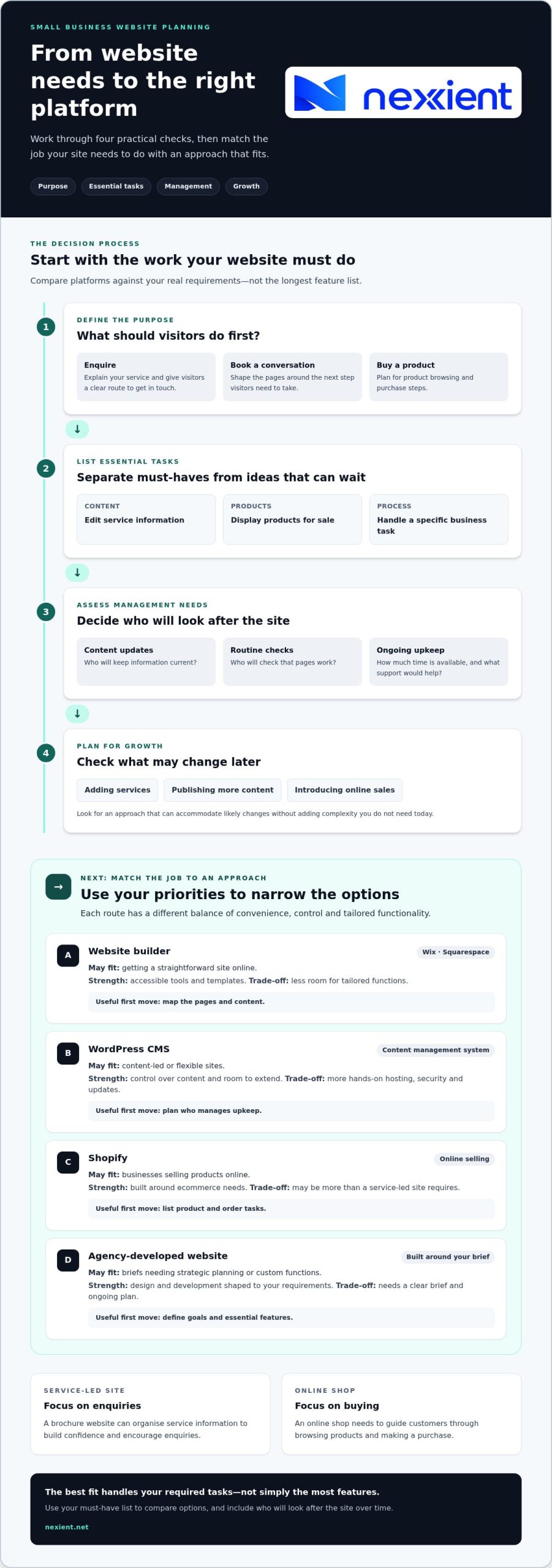
A website platform can mean a do-it-yourself builder, a content management system, an online selling system or an agency-developed solution. These options are not interchangeable: each offers a different balance of control, convenience and tailored functionality. A website platform provides the tools and structure for creating, managing and running your site.
Website builder, CMS or ecommerce platform: which category fits?
Builders such as Wix and Squarespace provide ready-made tools for creating and managing a site. Explore how website builder platforms work, then consider how well their editing tools and templates fit your needs. WordPress is a content management system (CMS), software for publishing and organising site content. Shopify is designed around online selling. An agency’s design and development service is different: it shapes and builds a site around your brief rather than being a platform itself.
| Approach | Typical fit | Practical strengths | Trade-offs | Likely next step |
|---|---|---|---|---|
| Website builder | Getting a straightforward site online | Accessible tools and templates | Less room for tailored functions | Map pages and content |
| WordPress CMS | Content-led or flexible sites | Control over content and room to extend | More hands-on hosting, security and updates | Plan who manages upkeep |
| Shopify | Businesses selling products online | Built around ecommerce needs | May be more than a service-led site requires | List product and order tasks |
| Agency-developed | Briefs needing strategic planning or custom functions | Design and development shaped to requirements | Needs a clear brief and ongoing plan | Define goals and essential features |
For a service business focused on explaining its offer and generating enquiries, a brochure website may be a better fit than a shop with product listings and purchase steps. The best platform for a small business website UK businesses can choose depends on this distinction, along with how much control or support the team needs. Identify the site’s main job first, then compare each approach against it.
How to compare small-business website platforms against your real needs
Choose around the work your website needs to do, not the longest feature list. To identify the best platform for a small business website UK firms can grow with, rank your priorities and compare each option against them.
What should a UK small business check before choosing?
- Define the purpose. Decide what visitors should do first: enquire about a service, book a conversation or buy a product. This will shape the pages you need and the tools they require.
- List essential tasks. Write down what the site must do now, such as letting you edit service information, display products or handle a specific process. Separate these must-haves from ideas that can wait.
- Assess management needs. Decide who will update content, check that pages work and arrange ongoing upkeep. Consider how much time they can give these tasks and what support would help them manage them.
- Plan for growth. Think about likely changes, such as adding services, publishing more content or introducing online sales. Check whether your preferred approach can accommodate those plans without adding complexity you do not need today.
If customers need to browse products and buy online, compare your requirements with an ecommerce website approach. If your priority is enquiries, focus on clear service information and a straightforward route to get in touch. For wider business planning, UK government business guidance can help you consider how the website fits your plans for running and growing the business.
The best fit is the one that handles your required tasks, not the one with the most features. Use your must-have list to narrow the options, then note who will look after the site over time. If you are shaping a brief for a tailored website, talk through your website requirements with Nexient.
When an agency-built website is the better next step
A platform may give you the tools to publish a site, but it will not necessarily plan how the pages, features and visitor journey should work together. Agency design and development can be a stronger fit when you need strategic planning, a distinctive design or functionality shaped around the way your business operates.
Professional development adds value when your website needs to do more than an off-the-shelf setup can comfortably support. That does not mean every small business needs a bespoke build. If your requirements are clear and simple, a self-managed option may be enough. If you are working out how a more complex brief should function, an agency can help turn those needs into a considered website.
The difference between a brochure site and an online shop comes down to the visitor’s task. A professional brochure website design can organise service information to build confidence and encourage enquiries. An online shop needs to guide customers through browsing products and making a purchase. Choose the structure around what you want visitors to do.
From platform shortlist to a website brief
Before settling on an approach, write a short brief that records:
- Your audience and what they need to find or do.
- The key pages and actions, such as submitting an enquiry or buying a product.
- Who will supply and update the content.
- The features the site needs now and any changes you anticipate later.
This gives design and development a clear direction and helps you compare options against real business needs. For a Worcestershire business planning its next stage, the Federation of Small Businesses offers resources for small businesses. Use your brief to compare how each approach handles the required pages, features and future changes.
If you are ready to turn your requirements into a practical website brief, discuss your website project with Nexient.
Build a website that’s ready for what comes next
Your website should support the business you are building, not just the one you run today. Before committing, write down the next change you expect, whether that is adding a service, improving how customers enquire or introducing online sales. This gives your decision about the best platform for a small business website UK businesses can use a practical starting point.
Nexient designs and develops brochure and ecommerce websites for businesses, including those in Worcestershire. Bring your goals and anticipated changes into the conversation so the site can be planned around what your business needs to do.
Discuss your small business website with Nexient and take a clear step towards a site shaped around your business goals.
Frequently Asked Questions
Which website platform is easiest for a small business to manage?
Hosted website builders such as Wix or Squarespace are often straightforward to manage because editing takes place in a visual dashboard. The best platform for a small business website UK firms can manage is still the one that fits their routine. Try drafting a page, changing an image and updating a service description before you commit. If these tasks feel awkward, keeping the site current may become a burden.
Can I move my small business website to another platform later?
Yes, but a move can involve more than copying text. Your design, page addresses, forms and other features may need rebuilding or adjusting, and export options vary by platform. Before switching, make an inventory of your pages and features, save copies of your content and note important web addresses. Then test that enquiries, purchases and links work on the new site before directing visitors there.
Do I need an ecommerce platform if I only sell a few products?
Not necessarily. If you only need to display a few products and invite people to enquire, a service-style site may be enough. If visitors must choose items, pay online and receive order information through the site, ecommerce functions matter even with a small range. Write down the steps customers should complete, then choose an approach that supports them without unnecessary complexity.
Should a small business use a website builder or hire a web design agency?
Choose a builder if your needs are straightforward and you are comfortable creating pages and maintaining content yourself. Consider an agency when you need strategic input, a distinct design or functionality shaped around your processes. For a Worcestershire business, decide who will supply content and manage updates so your choice reflects both your goals and the time available to run the site.