What if your CRM could remove workarounds rather than add another layer of admin? Customer and operational information can sit across separate tools, while teams repeat tasks to keep work moving. The benefits of a custom CRM system begin when it fits the way your organisation works, not simply when it offers more features.
A bespoke CRM is built around specific workflows; a customisable CRM adapts an existing product. Either may help, but a tailored system takes planning, and its value depends on clear processes, reliable data and staff adoption.
This guide explores where a custom CRM could make day-to-day work more efficient, how to spot tasks worth improving and what to weigh before proceeding. You’ll also find practical steps for mapping workflows and questions to discuss with a development partner, so you can judge whether a tailored system is the right next step.
Key Takeaways
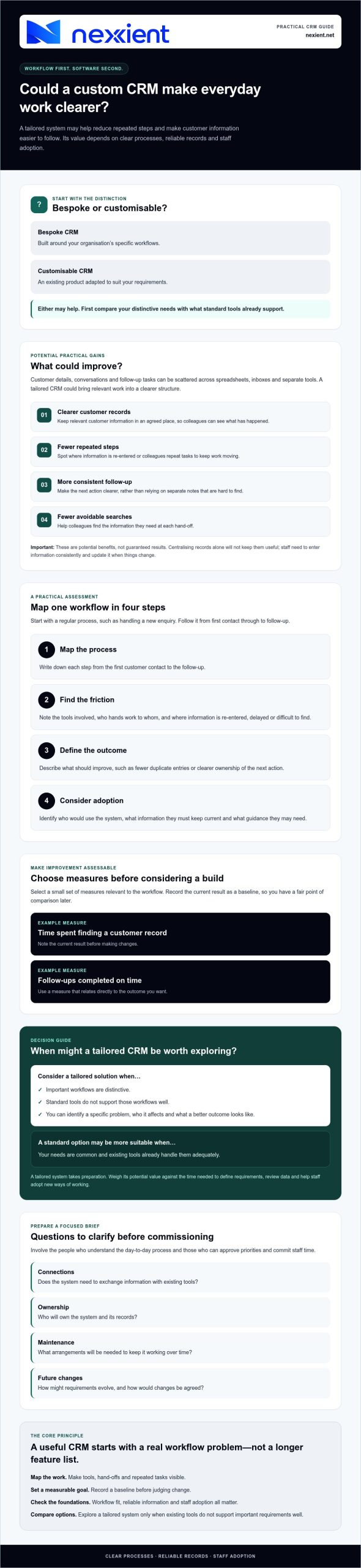
- Trace where customer information sits and note the hand-offs and repeat tasks that slow work down.
- Assess the benefits of a custom CRM system against practical outcomes, such as clearer records and more consistent follow-up.
- Set a measurable goal for the workflow you want to improve, then consider data preparation and staff adoption.
- Compare your distinctive requirements with what standard tools already support before deciding whether to explore a tailored CRM.
Benefits of a custom CRM system: what could it improve?
Customer details, conversations and follow-up tasks can end up scattered across spreadsheets, inboxes and separate business tools. Staff then spend time searching for the latest information or asking colleagues to fill in the gaps. A tailored CRM could bring relevant customer work into a clearer structure, provided it reflects how your team handles enquiries and relationships.
Customer relationship management (CRM) covers the practices and systems businesses use to manage customer interactions. A custom CRM is shaped around your organisation’s processes. Its potential benefits are practical: clearer records, fewer repeated steps and more consistent follow-up. For example, a team could record an enquiry and its next action in one agreed place, rather than relying on separate notes that colleagues struggle to find.
How a tailored CRM can connect everyday customer work
A shared view of customer interactions can help colleagues see what has happened and what needs attention, reducing avoidable searching and repeated questions. The right information depends on your workflow, so first identify what staff need to see at each hand-off. Centralising records alone won’t keep them useful: people need to enter information consistently and update it when circumstances change.
The benefits of a custom CRM system depend on more than the software. Workflow fit, reliable information and staff adoption all matter, and results aren’t guaranteed. Before exploring a build, list the tools involved in a typical customer journey, note where details are repeated or missed, and agree what a better outcome would look like. This gives you a practical starting point for deciding what a tailored system should improve.
How to assess the benefits of a custom CRM system for your workflows
Start with the work, not a list of features. A short review can help you decide whether a tailored CRM addresses a real operational problem or whether your current tools are sufficient.
- Map one workflow: Choose a regular process, such as handling a new enquiry, and record each step from first contact to follow-up.
- Identify friction: Note the tools involved, who hands work to whom, and where information is re-entered, delayed or hard to find.
- Define an outcome: Describe what should improve, such as fewer duplicate entries or clearer ownership of the next action.
- Assess adoption: Consider who would use the system, what information they must keep current and what guidance they may need.
Before discussing a bespoke system, document the existing tools, hand-offs and repeated tasks. Select a small set of relevant measures, such as time spent finding a customer record or the number of follow-ups completed on time. Record a baseline first, meaning the current result, so you have a fair point of comparison later. This problem-led, measured process reflects a disciplined approach to CRM.
Which business processes are suitable for a custom CRM?
Enquiries, customer follow-up and internal hand-offs may be worth assessing if they happen regularly and follow a clear pattern. Prioritise a recurring process that staff understand, rather than trying to automate every unusual exception. If your requirements are distinctive, a development partner can use your workflow map and desired outcomes to shape a focused brief.
Worcestershire businesses considering a tailored system can discuss their CRM requirements with Nexient, using the mapped process and baseline measures to make the conversation practical.
When custom CRM benefits justify exploring a tailored solution
A bespoke CRM may be worth exploring when important workflows are distinctive and standard tools don’t support them well. However, tailoring a system takes preparation: you’ll need to define requirements, review the information it should use and help staff adopt new ways of working. If your needs are common and existing tools handle them adequately, a standard option may be more suitable.
The benefits of a custom CRM system are more likely to matter when you can identify a specific problem, explain who it affects and describe what a better outcome would look like. Weigh that potential value against the time your organisation will need to contribute, including decisions about data and staff training.
What to clarify before commissioning a custom CRM
Prepare a brief before speaking with a development partner. Set out the workflows that matter most, who will use the system and what information it needs to handle. Then discuss points that shouldn’t be assumed as included:
- Connections: Does the system need to exchange information with any existing tools?
- Ownership: Who will own the system and its records?
- Maintenance: What arrangements will be needed to keep it working over time?
- Future changes: How might requirements evolve, and how would changes be agreed?
These questions help define the scope and clarify responsibilities before work begins. Involve the people who understand the day-to-day process, along with those who can approve priorities and commit staff time. Worcestershire-based Nexient develops custom CRM systems. Local businesses can review its custom systems offering and use their documented priorities to start a focused discussion.
Turn your CRM priorities into a practical next step
The benefits of a custom CRM system are clearest when it addresses a defined workflow problem, not simply when it offers more functions. Map the process, identify where time or information gets lost, and decide what outcome you want to improve. Then consider whether existing tools can meet that need or whether a tailored system is justified.
Before moving forward, prepare a concise brief covering priority workflows, users, information and the measures you’ll use to assess progress. Include the work involved in preparing data and helping staff adopt the system. These details give you and a development partner a firmer basis for discussing scope and fit.
If your requirements point towards a bespoke CRM, discuss your custom CRM requirements with Nexient. A clear starting point can help turn a complex decision into a considered plan.
Frequently Asked Questions
What are the main benefits of a custom CRM system?
The main benefits of a custom CRM system can include records arranged around your workflows, fewer repeated steps and clearer responsibility for follow-up. These outcomes depend on staff using the system consistently and keeping information accurate. Before considering a build, identify where your current process causes delays or duplicated work, then define what you want to improve.
Is a custom CRM better than off-the-shelf software?
Not necessarily. A custom CRM may suit a business with distinctive workflows that standard software doesn’t handle well, while off-the-shelf tools may be sufficient for common requirements. Compare your essential processes with what existing options can support. Consider the effort of defining, preparing for and adopting a tailored system alongside the potential value of a closer fit.
How can a custom CRM improve business processes?
A custom CRM can support a business process by organising information and tasks around the steps your team follows. For example, a defined enquiry process could make it easier to record key details, pass work to the right colleague and track the next action. First map the current process, note where delays or repeated entry occur, and set a suitable measure for improvement.
What should a business consider before building a custom CRM?
Before building a custom CRM, clarify the workflows it should support, who will use it and what information it must handle. Prepare existing data and plan how staff will learn and maintain accurate records. Also discuss any required connections to other tools, system ownership, maintenance and future changes. Worcestershire businesses can discuss their requirements with local digital agency Nexient.