
Your website shouldn’t just look the part; it should help move your business forward. A polished design matters, but it’s only one part of a useful site. The right website design agency connects your business goals with what customers need to know and do, then turns that into a clear, practical website.
If you’re unsure what an agency does beyond design, how to shape a brief or what a project might involve, you’re not alone. This guide explains how strategy, design and development work together, what to prepare before getting started and how to make informed decisions about scope.
You’ll also learn how different website formats support different priorities, from explaining your services to selling products online. With a clearer starting point, you can focus your project on what your business needs to achieve.
Key Takeaways
- See how a website design agency can connect strategy, user experience, design and development to support your business goals.
- Build a clearer project brief by outlining your goals, audience, content, essential functions and key decision-makers.
- Separate what your website needs at launch from ideas that can wait, helping you make confident decisions about scope.
- Match your next step to the right format, whether that’s a brochure website, eCommerce site or landing page. Nexient brings design, development and practical strategy together for businesses in Worcestershire.
What a website design agency brings beyond a polished appearance
A strong website needs more than attractive colours and imagery. A website design agency brings strategy, user experience, visual design and development together, so each decision serves a purpose. Web design spans several disciplines, and their value comes from how well they work together for your business and its visitors.
Effective website design makes a site clear, useful and functional, not simply attractive. Visitors should quickly understand what your business does, what you offer and what they can do next, whether that’s making an enquiry, exploring a service or buying a product.
Connect creative choices to real requirements. A distinctive layout is only useful if visitors can also find key information and take the next step. A business website, for example, can group service details, answers to common customer questions and contact options in a way that’s easy to follow.
How design and development support business goals
Start by identifying the main purpose of your site. If you want to encourage enquiries, make your services easy to understand and give visitors a clear route to get in touch. If you sell products, people need to browse and purchase without confusion. If your priority is sharing service information, organise pages around the details visitors are looking for.
Design shapes the page structure and visitor journey: what appears first, how related information is grouped and where the next step sits. Development turns the approved designs into a working website, including its pages and features. These stages need to align. A carefully planned layout must work in practice, not just in a design presentation.
Before a project begins, write down the main action you want visitors to take and the information they’ll need to take it. For example, if the goal is an enquiry, consider what a potential customer needs to understand before getting in touch and where the contact link should appear. This gives the project a practical direction for decisions about content, layout and functionality.
How to prepare a useful brief for a website design agency
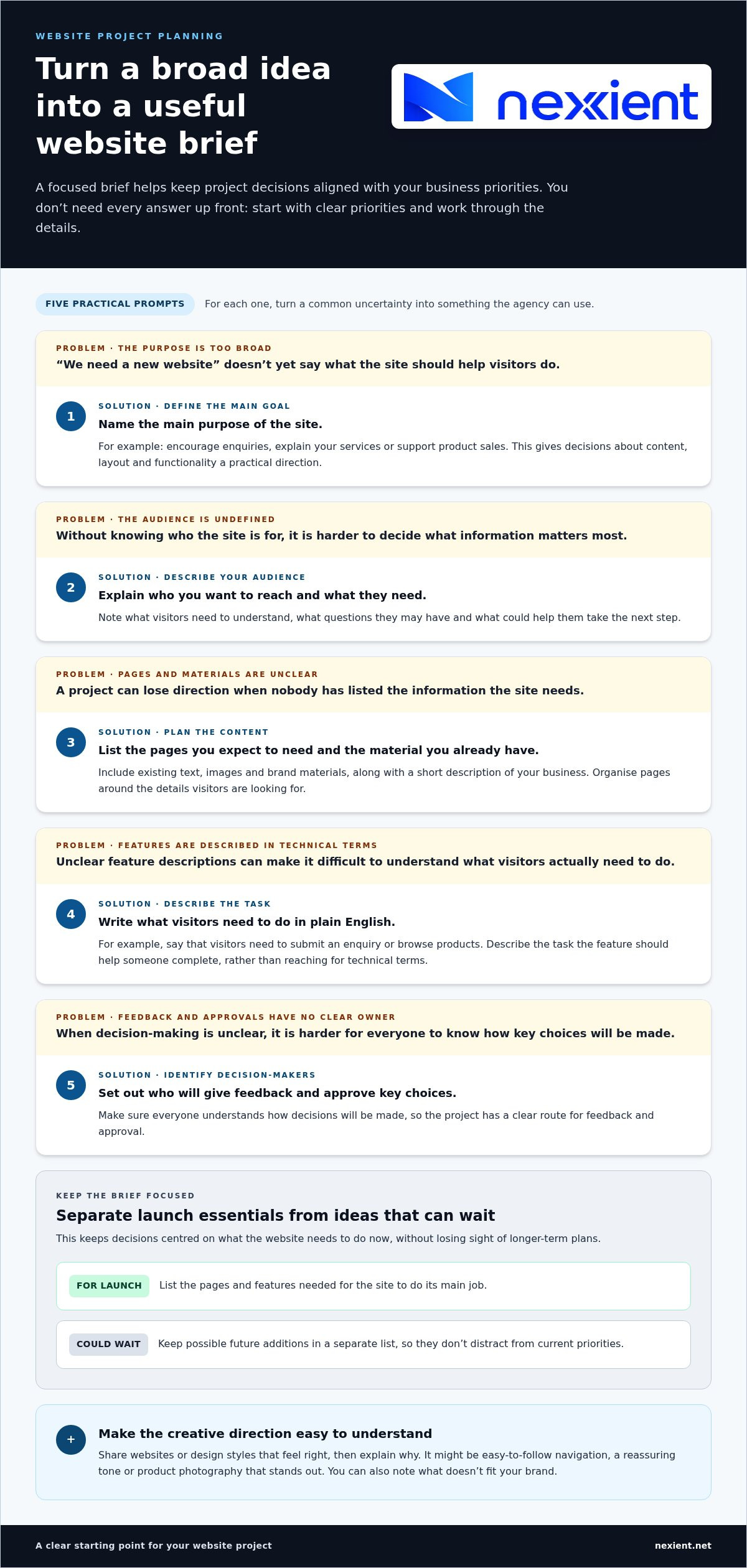
A focused brief turns broad ambitions into practical decisions. A useful brief aligns project decisions with your business priorities, so the website is built around what matters most. You don’t need every answer before starting. Clear priorities give the agency a strong foundation for working through the details with you.
- Define your goals. Name the main purpose of the site, such as encouraging enquiries, explaining your services or supporting product sales.
- Describe your audience. Consider who you want to reach, what they need to know and what might help them take the next step.
- Plan the content. List the pages you expect to need and note what existing text, images or brand materials could be useful.
- Outline required functions. Describe what visitors need to do in plain English, such as submit an enquiry or browse products.
- Identify decision-makers. Set out who will provide feedback and approve key choices, so everyone understands how decisions will be made.
What to include in your website project brief
Keep the brief practical. Add a short description of your business, your audience and the main action visitors should take. Then list the pages you need, the content you already have and any essential functions. If you’re unsure how to describe a feature, explain the task it should help someone complete rather than reaching for technical terms.
Examples can clarify the creative direction. Share websites or design styles that feel right, and explain why: perhaps the navigation is easy to follow, the tone feels reassuring or the product photography stands out. You can also point out what doesn’t fit your brand.
Separate launch essentials from ideas that could wait. For instance, identify the pages and features needed for the site to do its main job, then keep possible future additions in a separate list. This helps keep decisions focused without losing sight of longer-term plans. If you’re shaping a project, share your website project brief with Nexient.
Find a website design agency in Worcestershire that fits your next step
The right website format depends on what your business needs visitors to do. Before choosing, consider the information or action that matters most: do people need to understand your services, buy products or respond to a specific campaign? Nexient works with businesses in Worcestershire to shape those priorities into a practical website project, rather than adding features for their own sake.
Match the website format to the job it needs to do
A brochure website can introduce your business, explain its services and make contact routes easy to find. It suits organisations whose priority is giving prospective customers a clear picture of what they do and how to take the next step. To plan one, list the key services visitors need to understand, the questions they may have and the best way for them to make contact.
If you sell products online, an eCommerce website brings product browsing and purchasing together in one place. For a focused campaign, a landing page gives a particular offer, service or message its own destination, keeping the content centred on that subject.
Choose by need, not by trend. Write down the site’s main purpose, then match the format to the experience visitors need. A business that mainly needs to present its services may not need an online shop. A campaign with one clear message may not need a large set of pages.
Nexient is based in Worcestershire and designs and develops websites for businesses of different sizes. Its work combines clean design, smart development and practical strategy, with the project shaped around your goals. That gives local businesses a clear way to plan a website around current priorities and future direction.
Ready to explore the right format for your business? Discuss your website project with Nexient.
Take the next step with a website built for what’s ahead
A website project doesn’t need to solve every future challenge on day one. It should give your business a clear, useful foundation that can develop as your priorities change. Decide what visitors need now, what may change over time and which features are essential to the site’s main purpose. This helps prevent a first version from becoming overcomplicated.
Working with a website design agency gives you a way to turn that direction into a considered plan. You don’t need a perfect brief or every detail decided. Start with the business outcome you want to support and the questions you need to resolve. From there, the project can move forward through shared, practical decisions.
If you’re ready to shape your next steps, Discuss your website project with Nexient. Start with the outcome you want your website to support, and talk through a practical next step with Nexient.
Frequently Asked Questions
What does a website design agency do?
A website design agency plans and creates websites, from defining the site’s purpose to designing and developing its pages. The work can include user experience design, which considers how visitors move through and use the site, and front-end development, which builds the parts people see and interact with. Nexient provides website design and development for businesses in Worcestershire, with the project shaped around its audience and goals.
How much does it cost to work with a website design agency?
The cost depends on the project’s scope, complexity and level of custom development, so there isn’t one price that fits every website. A simple site and a project with bespoke functions involve different work. Nexient uses project-based fees that may be fixed or milestone-based. A proposal should set out the agreed work, costs and payment stages before the project begins.
How long does a website design project take?
Project timing varies according to the size of the site, the functions it needs and how quickly content and decisions are supplied. A website with many pages or custom features may need more work than a focused, simpler build. To help maintain momentum, agree on review points, assign someone to gather feedback and prepare text and images early. The project schedule can then reflect its scope and the decisions involved.
What should I prepare before speaking to a website design agency?
Bring a rough project outline and any materials that will help explain your current setup. Useful items include your existing website address, brand assets, product or service information, and a list of tools the new site may need to work with. You don’t need a polished presentation. Note what’s working, what isn’t and what you’d like to change, then use those points to guide the discussion.