The right questions to ask a web developer before hiring go beyond the initial build. Ask to see relevant work, clarify what the quote includes and how the project will progress, then discuss build options and post-launch support. A website also needs a clear plan for maintenance and content updates once it’s live.
Cost and delivery matter, but a polished portfolio is only part of the picture. You’ll also want to understand how the developer will shape the project around your goals and what support will keep the site useful after launch. This guide covers questions about previous work, budget, timelines, custom builds versus pre-built themes, and ongoing support and marketing, so you can make an informed decision.
Key Takeaways
- Ask for an itemised quote, a realistic timeline and a clear point of contact before work begins.
- Compare custom builds with pre-built themes against your goals, required features and plans for growth.
- Agree who will provide copy and images, how revisions are handled and what could affect the project scope.
- Clarify what maintenance, content-editing guidance and marketing support will be available after launch.
1. What is your estimated timeline and budget for this project?
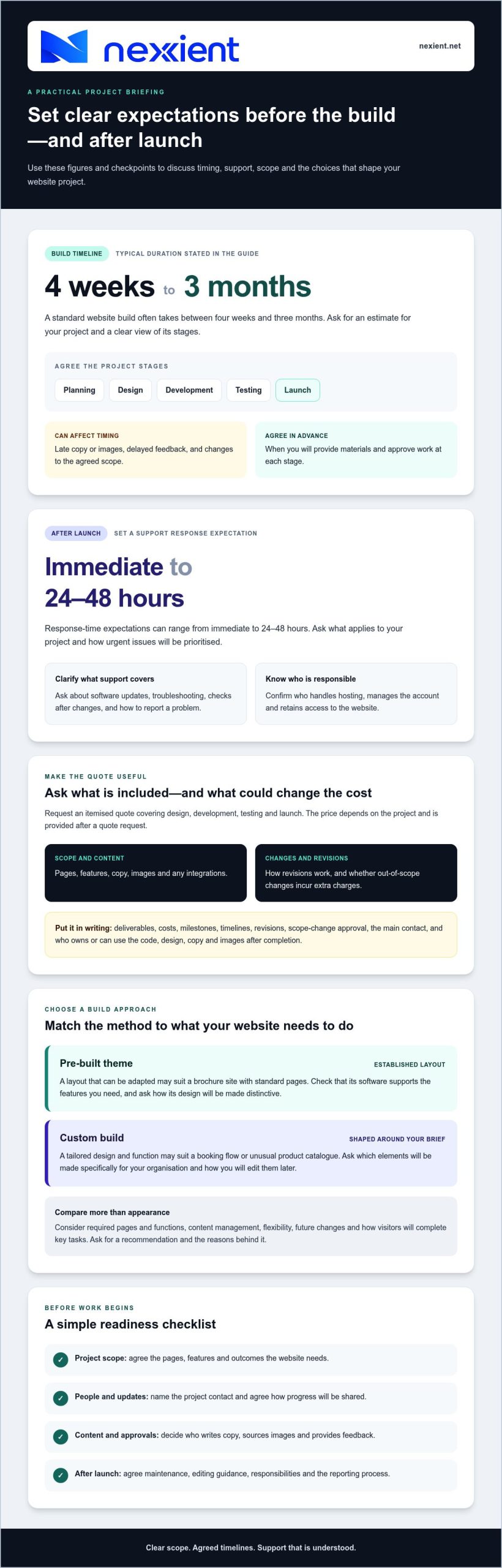
Start with scope: which pages, features and outcomes does your website need? Ask for a quote that itemises design, development, testing and launch. Agree who will write the copy and source images, since these tasks can affect the cost. Ask how revisions work and whether changes outside the agreed scope incur extra charges.
Review the developer’s portfolio for projects similar to yours. A business website and an online shop have different requirements, so ask what the developer handled in relevant examples. Discuss how they’ll learn about your organisation, which content management system they use and how the site will support search visibility. A content management system is software for editing and managing website content. Also ask who will manage the project and provide progress updates.
A standard website build often takes between four weeks and three months. Ask for the estimated timeline and stages, from planning and design through development, testing and launch. Late copy, images, feedback or scope changes can delay progress; agree when you’ll provide materials and approve work.
In the UK, the contract should set out deliverables, costs, milestones, timelines, revisions and how scope changes are agreed. It should name the main contact and explain who owns or can use the code, design, copy and images after completion. Clarify your access to the website and identify any third-party materials.
The price depends on the project and is provided after a quote request; features, content needs, integrations and revision scope affect the estimate. Use these questions to ask a web developer before hiring to discuss those factors and get expectations in writing.
2. Custom builds versus pre-built themes
Match the build method to your website’s needs. Ask the developer to compare a pre-built theme with a custom design, considering your required pages, functions and plans for change. A theme offers an established layout that can be adapted, while a custom build shapes design and function around your brief. A brochure site with standard pages may suit a theme; a booking flow or unusual product catalogue may need tailored development. Ask how each option will support visitors’ key tasks.
A commercial template may appear on many other websites. Ask how the developer will make its layout, colours and content distinctive, and check that the chosen software supports the features you need. For bespoke website design, ask which elements will be created specifically for your organisation and how you’ll edit them later. Compare flexibility, content management and ongoing changes, not just visual style. This helps you choose based on what the site needs to do.
Consider who will build the site. A freelancer may suit a small or straightforward project, while an agency may be better equipped for a larger build with several functions. An agency can bring developers, designers and search engine optimisation (SEO) specialists together. Ask who will handle design, development and search considerations, and how the work will be coordinated. One point of contact may be enough for a simple landing page; a complex online shop may need broader skills.
Ask the developer to explain the trade-offs against your actual requirements. Request a clear recommendation, the reasons behind it and how the chosen approach can accommodate new pages or features. The right choice connects design, function and future needs.
3. Post-launch support and marketing services
Launch day begins the next phase: keeping the website secure, current and useful. Ask what ongoing technical support covers, how to report a problem and who handles hosting. Hosting provides the facilities that keep a website accessible online. Clarify who manages the account and what access you retain, so you know where to turn if a technical issue affects visitors.
Ask what response time applies to support requests. Project response-time expectations can range from immediate to 24-48 hours, so agree what applies to your project and how urgent issues are prioritised. Also ask whether maintenance includes software updates, troubleshooting and checks after changes. Clear boundaries help you distinguish routine support from separately scoped development work.
If you want to update pages yourself, ask what help is available after launch. Request training or written guidance on editing content, adding images and making minor changes. For example, ask for a walkthrough of the pages your team will manage most often. Clarify who can make larger changes, such as adding a service page or changing a form.
Discuss how marketing activity supports the site’s goals. Ask what measures will show whether it’s working, such as enquiries or purchases, and how results will be reviewed. Google indexing doesn’t mean a page will appear on page one for a target search term. Ask what ongoing SEO (search engine optimisation) or email marketing involves, and what falls outside the build.
Put the support arrangements, responsibilities and reporting process in writing before launch. If you’re planning a website and want to discuss ongoing support, get in touch about your project.
Nexient: Business Websites
Nexient designs and develops Business Websites for organisations that need a professional online presence shaped around their goals. For an online shop, campaign page or charity site, Nexient’s eCommerce Websites, Landing Pages and Charity Websites provide relevant starting points.
Bring your priorities to the conversation: the pages visitors need, the actions they should take and the content your team wants to manage. Share your questions about scope, build approach and support. This creates a practical basis for discussing the right direction for your website and how it can serve your organisation over time.
Contact Nexient to discuss your website project.
Turn your website plans into a clear next step
Choose a developer who can connect your website’s purpose with the experience you want visitors to have. Before you begin, write down your main goal, your audience and the action you want visitors to take. These priorities will help focus the discussion and give you a stronger basis for assessing the right approach.
Nexient offers Business Websites, eCommerce Websites and Landing Pages for organisations with different goals. To explore how your plans could take shape, bring your priorities and project questions to the conversation. Use these questions as a starting point, then focus on the outcomes your organisation needs. Contact Nexient to discuss your website project.
Contact Nexient to discuss your project and take the next step towards a website built around your goals.
Frequently Asked Questions
Can you show me examples of your previous work?
Yes. Ask for examples that match your intended site, such as an online shop or charity website. Compare navigation, mobile layout and how clearly each example guides visitors towards an action. Nexient’s published case studies include Enviro Solar Films, Bowtique Pre-Loved, Victoria Falls Expert, Vibes N’ Shine and The Peter Hinkley Trust. Clients may opt out of having completed work showcased.
Do you offer ongoing maintenance and updates?
Yes. Nexient offers Website Maintenance, with ongoing maintenance, security and support through Nexient Care. Before work begins, list the routine tasks you expect, such as changing opening hours or adding a staff profile, and assign responsibility for each. A Worcestershire business with seasonal trading details can also agree how updates are submitted, approved and scheduled to keep site information accurate.
How do you ensure the website remains secure and up-to-date post-launch?
A sound security plan should explain the safeguards in place and who manages each part. Nexient’s website packages include SSL and security, and its ongoing support includes security. Clarify how software updates are handled and how issues involving external hosting, plugins or other platforms are managed. Nexient isn’t liable for problems caused by third-party services, which can affect a website beyond its control.
How do you ensure websites are optimised for SEO and performance?
Ask how SEO and performance are addressed during the build, then identify what will be measured after launch. Nexient’s website packages include SEO setup; its Business package also includes enhanced SEO and performance optimisation. Choose measures that fit your goal: track enquiries for a lead-generation site or completed purchases for an online shop, rather than relying on rankings alone.
How do you handle revisions and changes during the project?
Agree on a feedback process before design starts: gather comments in one document, identify the page and requested change, and record approval. Nexient includes reasonable revisions within the agreed scope. Major changes or new features may incur additional costs, discussed before or during implementation. Refining button wording differs from adding a booking function, so describe each requested change clearly.